Category Archives: Guest Posts

“Two Great Tastes that Taste Great Together”: Sweet Potato Grits

Elizabeth is a folklorist, a teacher, and a culinary experimenter with a low boredom threshold.  She and her partner have recently added a giant puppy to their household; he impedes the experimentation, but she loves him anyway.  They live in a large, old house with a small, old kitchen in upstate New York.  Elizabeth blogs at www.breadandhoneyblog.com.

Somehow, I never got around to grits until this winter.  My mother grew up in the South and she loves them; but my father is from the North and he doesn’t.  So the grits of my childhood were infrequent spoonfuls from Shoney’s breakfast buffets; white and wet and bland and, well, gritty.  Forgettable, if not for the dissonance between my Mama’s evident pleasure and the watery puddle creeping towards my French toast fingers.

As an adult, I became a lover of all porridgy foods: steel-cut oatmeal, risotto, polenta, congee.  But not grits — not until, just a little while ago, I was served cheese grits as a side dish at the White Dog Cafe in Philadelphia.  Heavens!  I don’t remember what unremarked entree they sat beside.  But I vividly recall their puddingy, cheddary goodness.  If ever a food was as comforting as a warm nap (or necessitated a warm nap), this was it.

My first couple of attempts did not, alas, achieve that level of homespun glory.  For one thing, I didn’t know anything about how grits should look in the pan, or how a grits-friendly recipe should be shaped.  Once they came out clumpy.  Once, sticky with cheese.  Once: “You put eggs in this?” a southern friend asked in polite astonishment, tasting a cheese-laced, grits-based casserole.  “You don’t need eggs in cheese grits.”  This perfectly paralleled my rice pudding experience, which culminated in the production of an eggy, gelid, baked rice pudding I found so repulsive that I tipped the whole quivering mess into the bin.

I thought I should simplify my approach to grits.  Start with the basics.  But basic grits, in my experience, were boring.  I set them aside for a while, as a puzzle I hadn’t solved.  I put grits in the mental storage locker where I keep the rice pudding and also pumpkin pasta sauce and pad Thai, all culinary challenges I have yet to overcome.  But grits weren’t quite done with me.

Three times in the last month, I stumbled across the very same recipe for Sweet Potato Grits.  It comes from Virginia Willis’ new cookbook, Basic to Brilliant, Y’all, a Southern-flavored, French-influenced collection of dual recipes: one basic, one tarted up for company.  I suspect that the Sweet Potato Grits recipe — and its fancier-pants companion, a grits-based spoonbread — have been distributed for publicity purposes; they certainly offer an enticing glimpse of the potential inherent in Willis’ approach.

As it happened, I was just about to host a brunch whose guests were all Southerners or celiacs (or both), so grits were an obvious choice.  When I mentioned the recipe to a friend and he said, “Two of my favorite foods!  Together at last!” it seemed fated.  I approached the recipe with some trepidation, given my grits experience (or lack thereof).  But did I make it once the week before to try it out?  Of course not.  I got out my heavy-bottomed saucepan on Sunday morning with a trembling hand.  The recipe calls for a cup of stone-ground grits, but I had plain Quaker old-fashioned grits languishing in the back of the pantry, so I used them.  Preparation was absurdly easy: heat the milk, add the cup of grits, whisking, and then the grated sweet potatoes.  Season and simmer for, oh, about an hour.

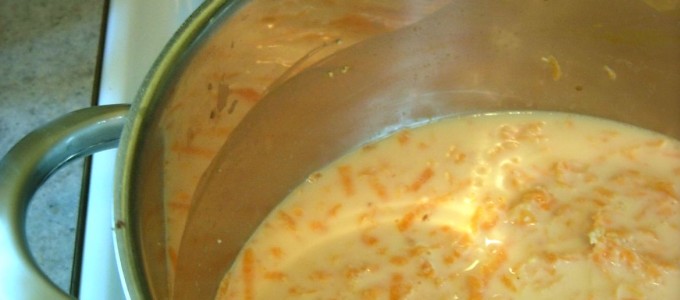
Actually it took a little over an hour; I consulted with a guest, who poked the orange mess in my saucepan with a wooden spoon and pronounced them done.  “But you can’t overcook grits,” she said, “So don’t worry.”

We finished with a dollop of butter as the recipe indicated, and then I added a swirl of cream because I am convinced that cream improves almost any dish.

The grits turned out saffron-colored, cinnamon-scented, and remarkably fluffy.  The slight sweetness of the potatoes and the hint of pie-type spiciness were just enough to stand in for the indulgent element at a brunch that lacked coffee cakes or cinnamon rolls or other deliciously indigestible gluten-filled brunchable baked goods.

Clean plates are the best compliment.

I don’t brunch often; indeed, I don’t even cook breakfast most mornings, because I’m so far from being a morning person that I’ve been known to set my bathrobe on fire while boiling water.  But now that brunch season is upon us, ushered in by the holidays, I’m pleased to add a new recipe to my repertoire.  These grits meet my need for ease in any morning cookery, and fulfill my dreams of creamy, fluffy, flavorful comfort food.

Perhaps it’s time to tackle rice pudding again.

Virginia Willis’ Sweet Potato Grits

  • 2 cups of water
  • 2 cups of milk
  • 1 cup of stone-ground grits (I used Quaker Old-Fashioned)
  • 2 medium sweet potatoes, peeled and grated
  • salt and pepper
  • 1/4 teaspoon ginger
  • pinch of cinnamon
  • 1 tablespoon butter

Combine the water and milk and bring to a low boil.  Slowly whisk in the grits.  Add the sweet potato and stir.  Season with salt and pepper (and I added the ginger and cinnamon at this point, too).  Lower the heat and simmer, stirring often, until creamy and thick.  (The recipe says 45-60 minutes; your results will depend on how slow your simmer is.)

When the mixture has thickened and the grits and the sweet potato are both tender, add ginger, cinnamon, and butter.  (I added heavy cream, too.)  Taste and adjust for seasoning.  Serve promptly.

Serves 4-6, generously

PS: I ate the leftovers for breakfast this morning, reheated with a bit more cream.  Lovely.

Lonely No More: Veg*n Holiday Cooking & Eating

Sharyn is a professor of English, avid runner, and champion napper. When not teaching, running, or under her beloved Slanket, she bakes vegan treats and greedily reads her friends’ blogs. Originally from Massachusetts, Sharyn has lived in southern Indiana for the past 8 years and earned her PhD in December 2011. (She’s wicked proud of it.)

Being vegan or vegetarian (veg*n) during the holidays can present a set of dietary challenges that may be compounded by the already-stressful nature of packing families, food, and quality time into a few short days at the end of the year. Food takes on a powerful connotation during the holiday season—the act of hosting and feeding others becomes an embodiment of Peace on Earth and Goodwill Toward Men. With all of that hanging over the meal, one’s food choices can take on a larger than life significance, as each thing one chooses to not eat disrupts the holiday spirit and leaves you open to accusations of Grinch-like behavior. Despite these potential problems, I’ve found that holidays as a veg*n can still be filled with warmth and fun and lots of sharing; in fact, there may be much more sharing than you ever expected.

Having been vegan for nearly 15 years now, I have had my share of holiday hassles. I’ve heard every joke, every silly question, every criticism of my dietary choices that exists. And often, I hear these comments from people who routinely stop at the McDonald’s drive-through for questionable “food.” By now, fortunately, my family is quite accepting of my lifestyle and choices, and holidays are much less stressful in the food department. Here are some things that have helped make that transition possible:

Learn how to cook or bake, or at least bring someone home with you who can. My husband, Brian, is an excellent cook. So excellent, in fact, that he does all the cooking for the two of us, and it’s all vegan, all the time. I’m the baker, and can put up pretty mean cupcakes and cookies come the holidays. The point is, being able to bring food to the table is a key component of the holiday season—don’t be left out! And it’s better for everyone if you can bring something truly homemade, rather than, say, frozen veggie burgers or something. Trust me, no one will hassle you if you bring them perfectly roasted vegetables or warm mashed potatoes or pecan pie truffles. Those truffles, in particular, are a Sure Thing—be ready to see them disappear, most likely without you even getting one. Which brings me to the next point:

Prepare to Share. Whether it’s out of hunger, politeness, or sheer curiosity, friends and family will want to try your treats. Back in the early days of my veganism, I would often have to say something like, “if you want to taste my dish, fine, but I don’t want to hear any criticism!” That, of course, is not the most friendly or heart-warming introduction to veg*n cooking, so I’ve learned to amend my approach. By bringing enough to share, not only are you participating in the spirit of the holidays, but you are letting others get a taste of veg*n life. Just make sure you get a taste, too!

And getting a taste means not only indulging in your favorite treats, but getting a taste of the holiday cheer, too. So much stress about the holidays comes from having unrealistically high expectations, lots of family and friends in close proximity, and neglecting yourself. Make sure to enjoy your favorite holiday foods and allow others the same courtesy. In other words, beyond introducing folks to the deliciousness of your recipes, save the veg*n evangelizing for another time. No doubt there will be family members teasing, taunting, or questioning, but for the sake of holiday harmony do your best not to take the bait and not to lose your patience. By no means should you shrink from an honest discussion of diet health and ethics, but there’s probably no need to rattle off factory farming statistics to your drunk Uncle Jerry while in the church foyer awaiting the kids’ holiday pageant, for instance. (In fact, that situation might mean problems much bigger than your veg*n diet.) Throughout the years, I’ve found that the sharing and indulgences now go both ways at my family celebrations. My family accommodates my diet now, even getting excited when they find vegan snacks and pastries that I can eat. They also make special requests—this year, I am to make this delectable maple pecan pie for Christmas dessert. (side note: I recommend making and pre-baking Mark Bittman’s pie crust instead of the one in this pie recipe, using 2 TB of Earth Balance shortening and 6 TB of Earth Balance buttery sticks in place of butter. It comes out so perfectly flaky and delicious that no one will realize! Or at least they won’t care!) So, have courage dear veg*ns; the holidays are meant for all to enjoy as they wish, and you are no different. It just means being proactive about your own enjoyment and being prepared with delicious goodies to share.

Remember to be kindly about sharing, as well. Every year I think I might get Brian’s expertly roasted Tofurky all to ourselves; yet sadly, his technique truly makes something special out of what is otherwise an underwhelming meat alternative, and I am always left without seconds. But it’s worth it to see so many happy faces around the dinner table, and to see all of us sharing a meal in the true spirit of the holidays.

Here are Brian’s tips to get the most out of a store-bought Tofurky Roast, should you choose one for your holiday meal:

  • For the glaze, don’t go by the box instructions. Simply use equal parts olive oil, tamari, and orange juice, with a pinch of fresh sage, and brush the roast with it.
  • Surround the roast with lots of fresh veggies—potatoes, carrots, celery, and onions are perfect—in the baking dish.
  • Make sure you keep the roast surrounded with about 1/4 inch of liquid (veggie stock, preferably, but water will do) while it’s in the oven; this way, when you cover the dish with foil, steam will be created, keeping the roast moist as it bakes.
  • When you remove the foil to finish baking the roast, spritz it with olive oil spray before putting back in the oven, uncovered. This helps create a nice, dark, tasty skin.
  • When the roast has finished baking, let it sit for at least 5 minutes before attempting to slice it. This insures the moisture and temperature have a chance to even out.
  • Ignore the stuffing inside the roast—it’s honestly not very good, but a well-baked Tofurky can still be a delicious centerpiece to a holiday meal.